
Written by Aremuorin / Contact / Mailing List / Linktree / Latest Post / WhatsApp – Let’s keep the conversation going !!!
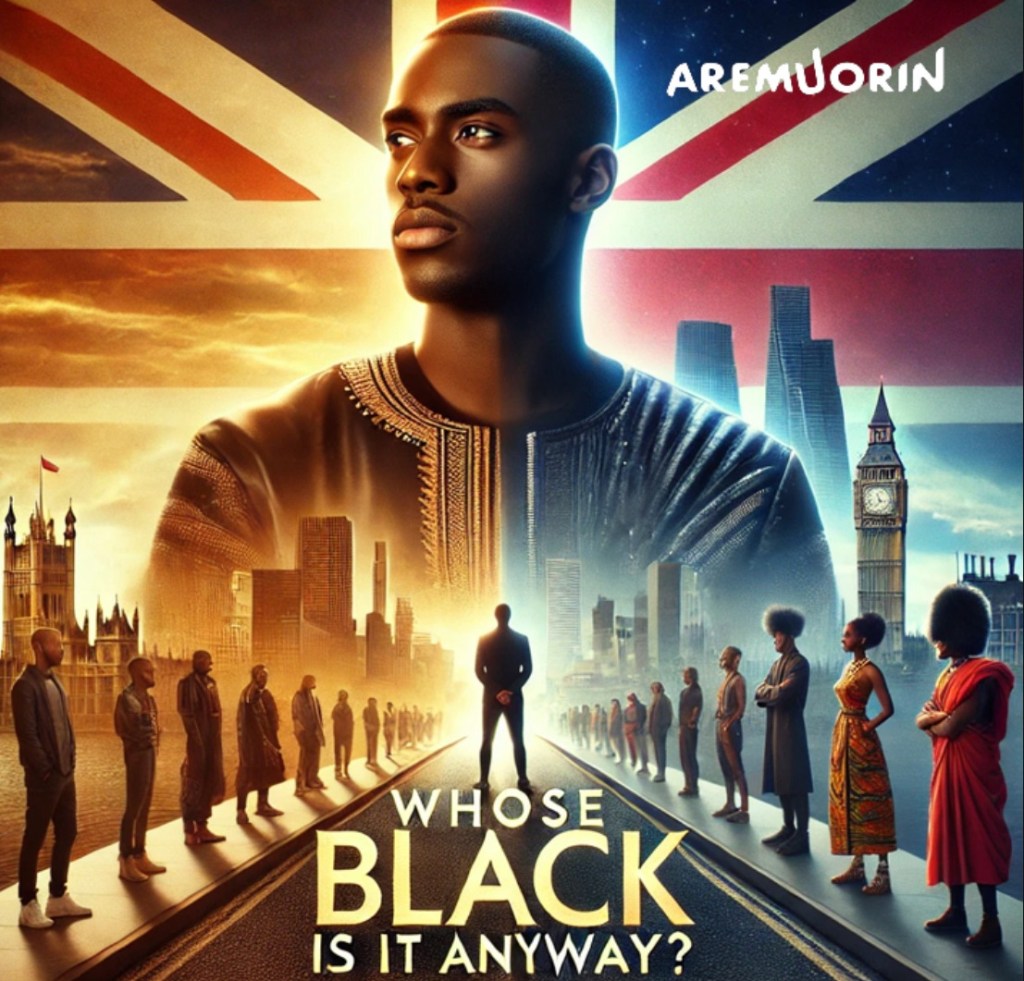
An Open Letter on Voice, Identity & Afrocentric Belonging
Intro:
I recently walked into a room, expecting connection.
Expecting shared roots.
Instead, I found walls.
I made a comment—offhand, curious, culturally coded:
“You don’t sound Black.”
It wasn’t an accusation. It wasn’t a judgment.
It was a moment of surprise—
a knock at the door of familiarity that wasn’t answered.
But what followed felt like rejection from the very playground I thought I belonged to.
A kind of gatekeeping dressed as pride.
A reminder that even in Black spaces, the idea of Blackness is still contested ground.
Let Me Clarify My Intent
I didn’t walk into that space to check anyone’s credentials.
I came with curiosity, not judgment.
I’ve walked through many circles where Afrocentric expression is celebrated, reclaimed, remixed.
When I spoke, I wasn’t trying to box anyone in.
I was trying to unbox Blackness—to witness its resonance, its rhythm, its range.
The Sound of Blackness Isn’t One Note
From the Francophone to the British, African to Caribbean,
Blackness moves in dialects and drums, in code-switches and cadences.
Sometimes it sings in Queen’s English.
Sometimes it speaks with ancestral tone.
Sometimes it whispers, sometimes it shouts.
But it always vibrates with history.
And in that moment, what I expected wasn’t superiority or sameness—it was familiarity.
And maybe, just maybe, I was looking to celebrate a sound I thought we both shared.
Sounding Black” isn’t inherently a stereotype — it becomes one through the lens of racism, ignorance, or elitism
Why society often defaults to the stereotype:
1. Colonial legacies taught that “proper” meant “white” and anything else was “improper.” That stain still lingers.
2. Media often showcases the exaggerated or parodied versions, which reinforces one-dimensional views.
3. The dominance of “Standard English” is tied to respectability politics — anything else gets seen as “less than,” even when it’s richer and more expressive.
4. People confuse linguistic difference with deficiency — and that’s where prejudice creeps in.
Let’s Talk About Erasure and Celebration
We live in a world that has tried to erase Black culture, tokenize it, and turn it into a costume.
So yes—I get excited when I see Black communities show up as themselves, unfiltered and empowered.
I lean into that. I want to champion that.
I wasn’t looking to gatekeep.
I was trying to connect—to ask:
“What’s your story? What shaped your sound?”
Can We Open the Conversation Instead of Closing the Gate?
If I had been on the other side of that moment,
I might’ve said:
“Yeah—I speak like this, but here’s where I’m from, here’s what I carry, here’s the sauce in my surname.”
Because dialogue matters.
We don’t all sound the same—and that’s not a problem.
That’s the poetry of diaspora.
Let’s not shut down curiosity.
Let’s reframe it.
“Sounding Black”: A Manifesto of Pride
They said I sounded Black—
as if it were a flaw.
As if my voice carried shame instead of soul.
But let me tell you what it really carries:
It carries rhythm.
It carries legacy.
It carries the prayers of my grandmother and the laughter of my cousins.
It carries the bassline of blues, the rise of gospel, the echo of protest, and the roar of survival.
It carries me.
Closing: Let’s Celebrate Blackness in All Its Tones
So no—I don’t regret being curious.
I just regret that curiosity isn’t always welcome.
I believe we should be able to ask questions about culture, voice, and identity—without fear, without shame, and without shutting the door.
Because Blackness is not a performance—it’s a presence.
It’s not a soundbite—it’s a story.
And I, for one, want to keep listening.
Sounding Black is not a stereotype.
It is a symphony of roots.
It is coded survival.
It is the lyrical language of a people who made language their own
when theirs was stolen.
When I sound Black, I sound like home.
I sound like double-dutch in the summer.
Like the hush of barbershop wisdom.
Like the way my auntie can read you for filth without ever raising her voice.
Like joy, cracked wide open, and still whole.
So no—
I will not let my dialect be dissected,
my tone corrected,
my tongue trimmed to fit colonial comfort.
To sound Black is to sound brilliant.
To sound Black is to echo generations.
To sound Black is to rise in the music of who we are.
Not a mimic. Not a moment. A movement.
I don’t sound Black. I am Black.
And my voice, in all its registers,
is a celebration.
Let’s Spark the Dialogue
What does Blackness sound like to you?
How do you connect with your cultural roots—through language, tone, or silence?
Drop your thoughts below. Let’s build a bigger table and invite every voice to speak.
Aremuorin is a multi-award-winning artist, writer, and humanitarian, known for his unique fusion of music, writing, and advocacy. With a focus on empowerment and social justice, his work aims to inspire, educate, and uplift communities worldwide. Aremuorin has been honored with numerous accolades, including awards in the UK, USA, and Africa, and holds two honorary doctorate degrees for his contributions to both the arts and humanitarian work. His artistry goes beyond entertainment, as he uses his platform to bring attention to issues of mental health, social change, and cultural pride.
Written by Aremuorin / Contact / Mailing List / Linktree / Latest Post / WhatsApp – Let’s keep the conversation going !!!
 Dr. Ambs Aremuorin
Leave a comment