
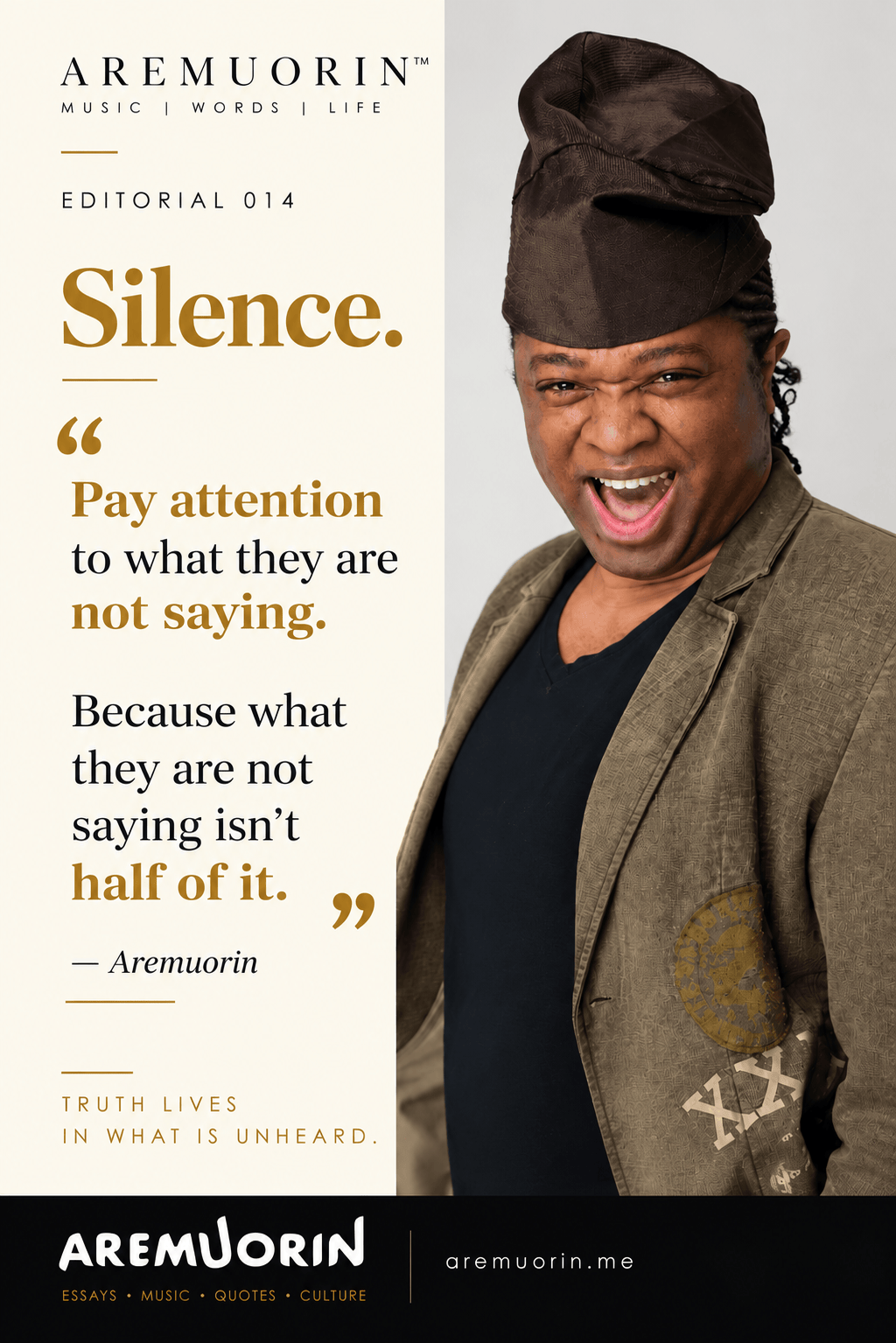
Three days after World Mental Health Day, there is a question worth carrying beyond the campaign itself: Are we actually listening to people — or merely allowing them to speak?
The World Health Organization’s 2026 theme, “Lived experiences heard: real voices, real change,” makes an important distinction. People with lived experience should not simply be invited to tell their stories; their knowledge should help shape the policies, services and decisions that affect their lives.
That distinction matters far beyond mental health. It matters in families. In relationships. In workplaces. In healthcare. In institutions. And anywhere one person holds enough power to define another person’s reality.
Hearing Is Not the Same as Listening
We live in a culture that increasingly asks people to share.
Tell your story. Speak your truth. Tell us what happened.
But what happens when somebody finally speaks and the listener immediately begins rewriting what they heard?
You misunderstood. It probably wasn’t that bad. I’m sure they didn’t mean it. You’re too sensitive. Why didn’t you say something sooner?
Sometimes society wants testimony without the inconvenience of believing the person giving it.
That is not listening. It is extraction.
Lived Experience Is Knowledge
There are things academic study can teach us. There are things professional training can teach us. And there are things that only experience can reveal.
That does not mean every individual interpretation is automatically correct or that one person’s experience represents everybody else’s. It means something much simpler: being there teaches you something.
Someone who has navigated a system can often identify obstacles invisible to the people who designed it. Someone who has survived a difficult relationship may recognise patterns that look insignificant from outside. Someone repeatedly ignored by an institution understands the emotional cost of having to prove the same reality again and again.
WHO describes lived experience as a vital form of expertise. Its 2026 campaign argues that meaningful participation must go beyond collecting testimony and create genuine opportunities for people to influence decisions.
There Is a Difference Between Consultation and Power
This may be the uncomfortable part.
Institutions often like consultation. Consultation can be photographed. It can be documented. It can appear in a report.
But participation is different.
Participation means the person speaking can actually influence what happens next. That requires giving up some control.
WHO reports that 80% of responding countries with a mental-health policy or plan said people with lived experience had been consulted during its development, while only 45% reported ongoing collaboration with people with lived experience or family and caregiver advocacy groups in planning, delivering or monitoring services.
That difference deserves attention.
Being asked what you think is not the same as having what you say matter.
Do Not Turn People Into Case Studies
There is another danger.
Once somebody’s difficult experience becomes interesting to the outside world, the individual can slowly disappear behind the story.
They become: the victim. The survivor. The patient. The vulnerable person. The difficult person. The inspirational person.
Every one of these labels can flatten a complicated human being into something easier for everybody else to understand.
People are not merely the worst thing that happened to them. Nor should somebody have to repeatedly display their wounds to qualify for compassion.
This happened to me. It affected me. I know what I experienced. And I am still more than what happened.
Listening Must Eventually Become Action
Listening without action can become another performance.
If somebody tells us repeatedly that a system is harming them and nothing changes, eventually another listening exercise becomes meaningless.
If somebody establishes a boundary and we repeatedly negotiate around it, we did not misunderstand the boundary. We disregarded it.
If somebody tells us what they need and our response is to explain why they should need something else, we are no longer listening.
Real listening has consequences. It may change a policy. It may change a relationship. It may require an apology. It may expose something uncomfortable. It may require us to admit that our original interpretation was wrong.
That is why listening can be difficult.
To genuinely hear another human being is to accept the possibility that what they tell us may require something from us.
Your Voice Should Not Need Permission to Be Real
Perhaps this is where culture needs to evolve.
We should stop treating lived experience as inferior evidence simply because it arrives through a human voice.
We can verify facts. We can ask questions. We can disagree respectfully. But we should begin from dignity rather than suspicion.
Because sometimes the person closest to a problem has spent years trying to explain something everyone standing comfortably outside it believes they understand better.
So ask people about their experiences. Listen. Learn. But do not ask for someone’s story merely so you can return it to them with a different meaning.
If you ask me what I lived, be prepared to hear what I say.
Aremuorin
Thoughts. Culture. Truth.
Continue the Conversation
This reflection is part of an ongoing Aremuorin conversation about voice, dignity and what happens after somebody speaks. Read Being Heard Is Not the Same as Being Listened To and The Performance of Caring: When Listening Becomes Theatre.
Stay connected: Subscribe to the Aremuorin Journal for new Tuesday social commentary, Thursday thought leadership and Sunday reflections, and explore more Aremuorin editorials across the Journal.
Further reading: World Health Organization — World Mental Health Day 2026: Lived experiences heard: real voices, real change.


Leave a Reply