
Written by Aremuorin / Contact / Mailing List / Linktree / Latest Post / WhatsApp – Let’s keep the conversation going !!!
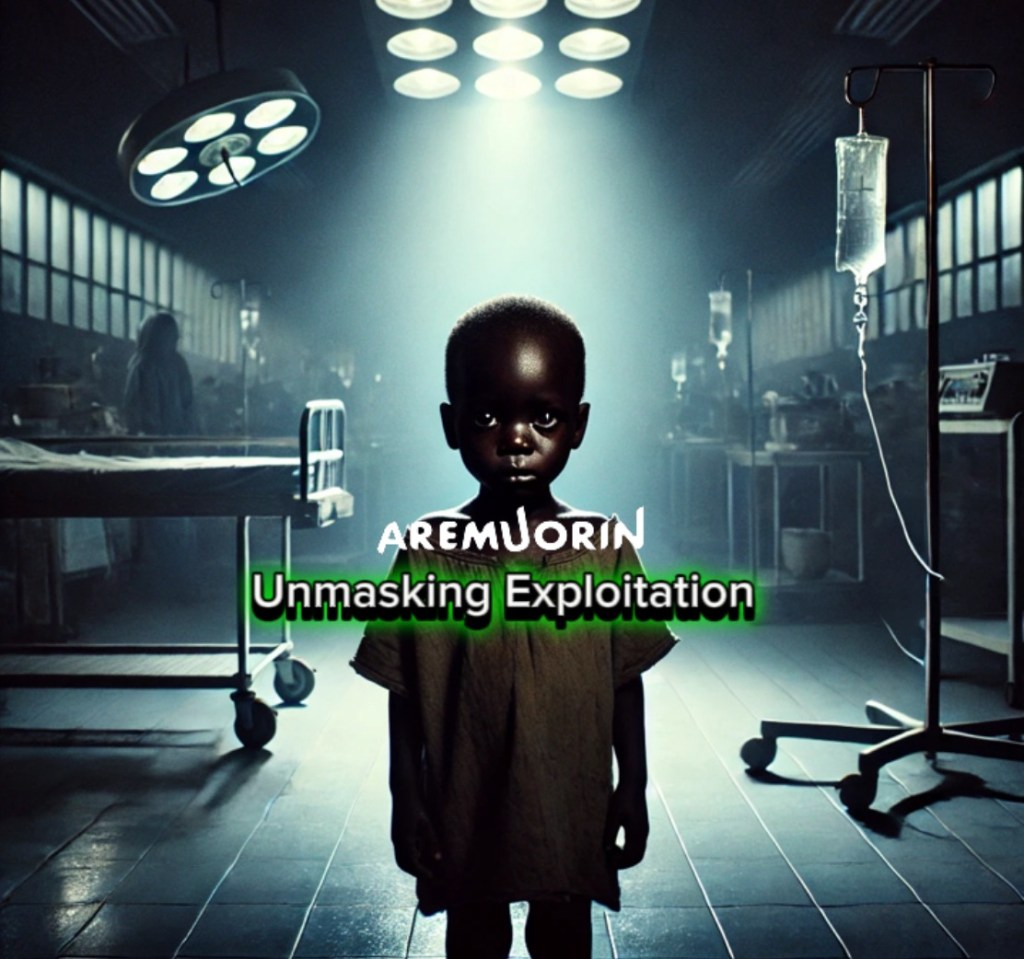
Africa, a continent of resilience and innovation, has long been a silent stage for the exploitation of its people in unethical medical experiments. These trials, often disguised as humanitarian aid or medical advancement, have left devastating legacies on vulnerable populations.
From unauthorized clinical trials to covert government experiments, these stories demand accountability and global reform.
A Dark Chapter in Medical Research: Case Studies of Exploitation
Case Study 1: The 1996 Pfizer Trovan Trials in Nigeria
In 1996, during a meningitis outbreak in Kano, northern Nigeria, Pfizer conducted clinical trials of its experimental antibiotic, Trovan, on children. Without obtaining proper parental consent, the trials resulted in severe side effects, including fatalities and lifelong disabilities. Outrage ensued, leading to lawsuits that exposed how multinational pharmaceutical companies exploit crises in developing nations for profit. Trovan was later banned in the EU due to safety concerns, raising an unsettling question: Why were African children treated as test subjects for a drug deemed unsafe elsewhere?
• Outcome: Lawsuits were filed against Pfizer by the Nigerian government and families of the victims. Pfizer settled the lawsuits in 2009, paying $75 million to Kano State.
Case Study 2: Apartheid-Era Secret Experiments in South Africa
Under South Africa’s apartheid regime, unethical medical experiments reached horrifying extremes. During the 1980s, black prisoners and soldiers were unknowingly subjected to drug and chemical trials. These experiments left many with severe health complications, highlighting the systemic abuse and racism entrenched in that era. This dark chapter serves as a grim reminder of how governments can weaponize science against marginalized groups. For more context –
Entities: South African Defense Force (SADF), Project Coast
• Individuals:
• Dr. Wouter Basson (nicknamed “Dr. Death”), a chemical and biological warfare expert who led Project Coast, the apartheid government’s secret chemical and biological weapons program.
• Incident: Black prisoners and soldiers were unknowingly subjected to chemical and drug experiments, resulting in severe harm. Basson was accused of designing drugs to suppress fertility in Black populations.
• Outcome: Although Basson faced charges after apartheid ended, he was not convicted, sparking outrage.
Case Study 3: Uganda and the Early HIV/AIDS Trials
Uganda, a focal point for HIV/AIDS clinical trials in the epidemic’s early days, witnessed the ethical boundaries of medical research being tested. While antiretroviral treatments eventually revolutionized the fight against HIV/AIDS, some trials lacked transparency. Participants were often uninformed about the experimental nature of treatments or potential risks, reflecting a broader pattern of exploiting populations desperate for solutions.
Case Study 4. Lilly and Drug Testing in Homeless Populations (1990s)
• Company: Eli Lilly
• Incident: The pharmaceutical giant was criticized for conducting drug trials on homeless individuals in the U.S. without fully informing them of the risks.
• Outcome: This raised questions about targeting vulnerable populations in clinical trials.
5. Roche and Tamiflu Trials in Southeast Asia (2000s)
• Company: Roche
• Incident: During the avian flu crisis, Roche conducted Tamiflu trials in Southeast Asia, with accusations of inadequate consent and exploitative practices.
• Outcome: The incident highlighted the ethical concerns of testing drugs in low-income countries during health emergencies.
6. Tuskegee Syphilis Study in the U.S. (1932-1972)
• Entities: U.S. Public Health Service (PHS)
• Incident: The PHS deliberately withheld treatment from 600 Black men infected with syphilis to study the progression of the disease, even after penicillin became widely available as a cure.
• Outcome: This study became a symbol of medical racism and mistrust in healthcare systems. The U.S. government formally apologized in 1997.
Why Africa? The Perfect Storm for Unethical Trials
Africa’s vulnerabilities—poverty, limited education, and inadequate healthcare infrastructure—make it a prime target for unethical clinical trials. Despite being home to over 75% of the world’s population, low- and lower-middle-income countries (LMICs) host only 32% of randomized controlled trials (RCTs). Even when trials occur, barriers such as language differences, economic constraints, and mistrust often leave participants unaware of their rights or the risks involved.
This imbalance is compounded by weak regulatory frameworks, allowing corporations to exploit legal loopholes and operate with impunity. The result? A persistent cycle of exploitation under the guise of progress.
Empirical Data: A Call for Accountability
The following statistics paint a sobering picture of medical research in LMICs, with a focus on Africa:
• Disproportionate Research Locations: A 2009 study revealed that one-third of clinical trials by major U.S.-based pharmaceutical companies occurred outside the U.S., often in low-income countries.
• Ethical Violations: Reports show that many trials in Africa do not adhere to international ethical guidelines, putting participants at significant risk.
• Corruption and Barriers: Corruption, limited infrastructure, and ethical concerns restrict Africa’s representation in global trials, with less than 10% of RCTs conducted in sub-Saharan Africa.
These figures underscore the urgent need for stringent ethical oversight, capacity building, and policy reforms to ensure responsible clinical research.
The Way Forward: Reforming Global Medical Research
1. Strengthen International Regulations: Organizations like the WHO and local governments must enforce strict ethical guidelines for clinical trials, prioritizing transparency and informed consent.
2. Empower Local Communities: Education and awareness programs can help vulnerable populations understand their rights and hold researchers accountable.
3. Hold Corporations Accountable: Stricter penalties, including hefty fines and bans, should be imposed on companies that exploit vulnerable populations.
4. Invest in Infrastructure: Building stronger healthcare and regulatory frameworks in LMICs will reduce dependency on foreign aid and increase local oversight of clinical trials.
A Personal Reflection: Why This Matters
As an artist, storyteller, and advocate for social change, I see parallels between the silencing of Africa’s voices in medicine and the erasure of its narratives in the global cultural landscape. These stories are not just cautionary tales; they are urgent calls to action. Amplifying these voices and challenging systems of power are the first steps toward justice.
Join the Fight for Justice
Justice begins with awareness, but it thrives on action. Support organizations like Amnesty International, Doctors Without Borders, and The African Clinical Trials Alliance, which are advocating for ethical research practices. Share this story to amplify the voices of those silenced by history. Together, we can ensure medical research respects human dignity everywhere.
Hashtags for Awareness
#UnmaskingExploitation #MedicalEthics #JusticeForAfrica #EthicalMedicine #HumanRights #GlobalChange #SocialImpact #MedicalJustice

Aremuorin is a multi-award-winning artist, writer, and humanitarian, known for his unique fusion of music, writing, and advocacy. With a focus on empowerment and social justice, his work aims to inspire, educate, and uplift communities worldwide. Aremuorin has been honored with numerous accolades, including awards in the UK, USA, and Africa, and holds two honorary doctorate degrees for his contributions to both the arts and humanitarian work. His artistry goes beyond entertainment, as he uses his platform to bring attention to issues of mental health, social change, and cultural pride.
Written by Aremuorin / Contact / Mailing List / Linktree / Latest Post WhatsApp – Let’s Connect !!! Like, share and leave your comments. Thank You.
 Aremuorin™
Leave a comment