
Written by Aremuorin / Contact / Mailing List / Linktree / Latest Post – Let’s Connect !!! (C) 2025 Aremuorin – All Rights Reserved
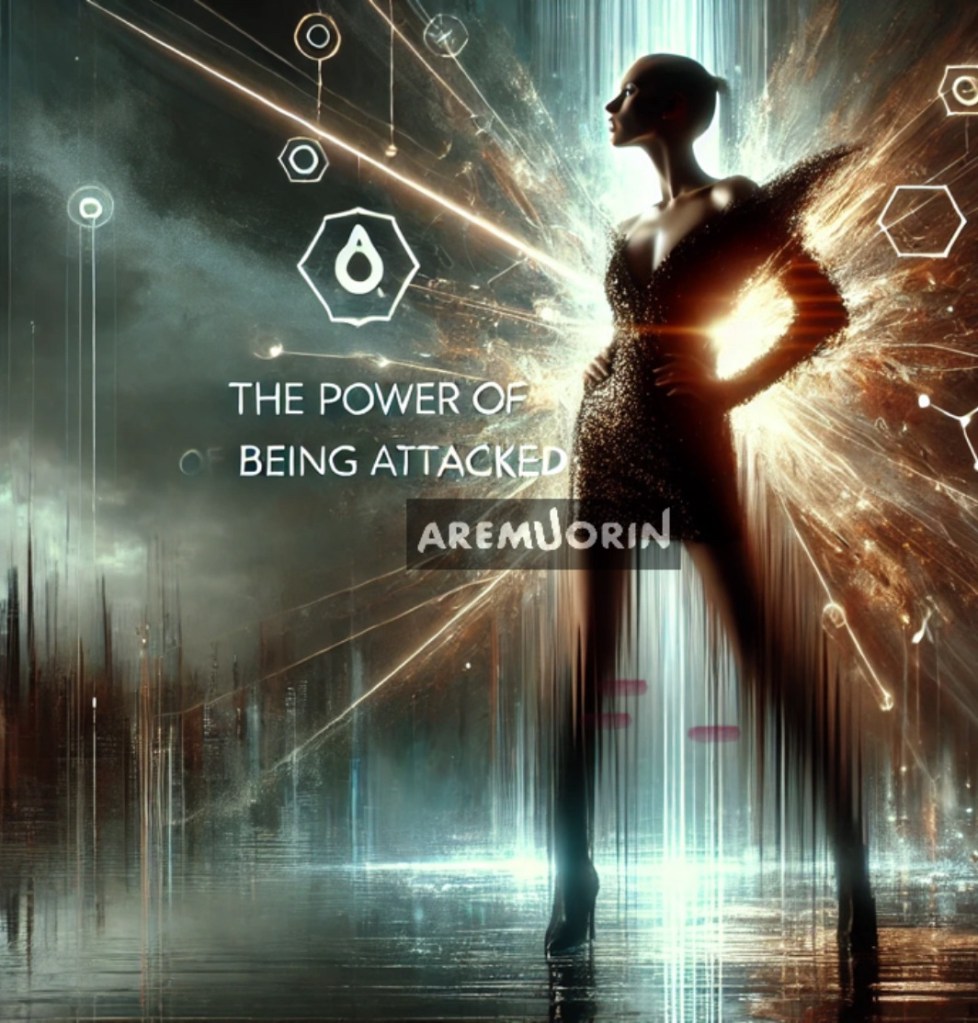
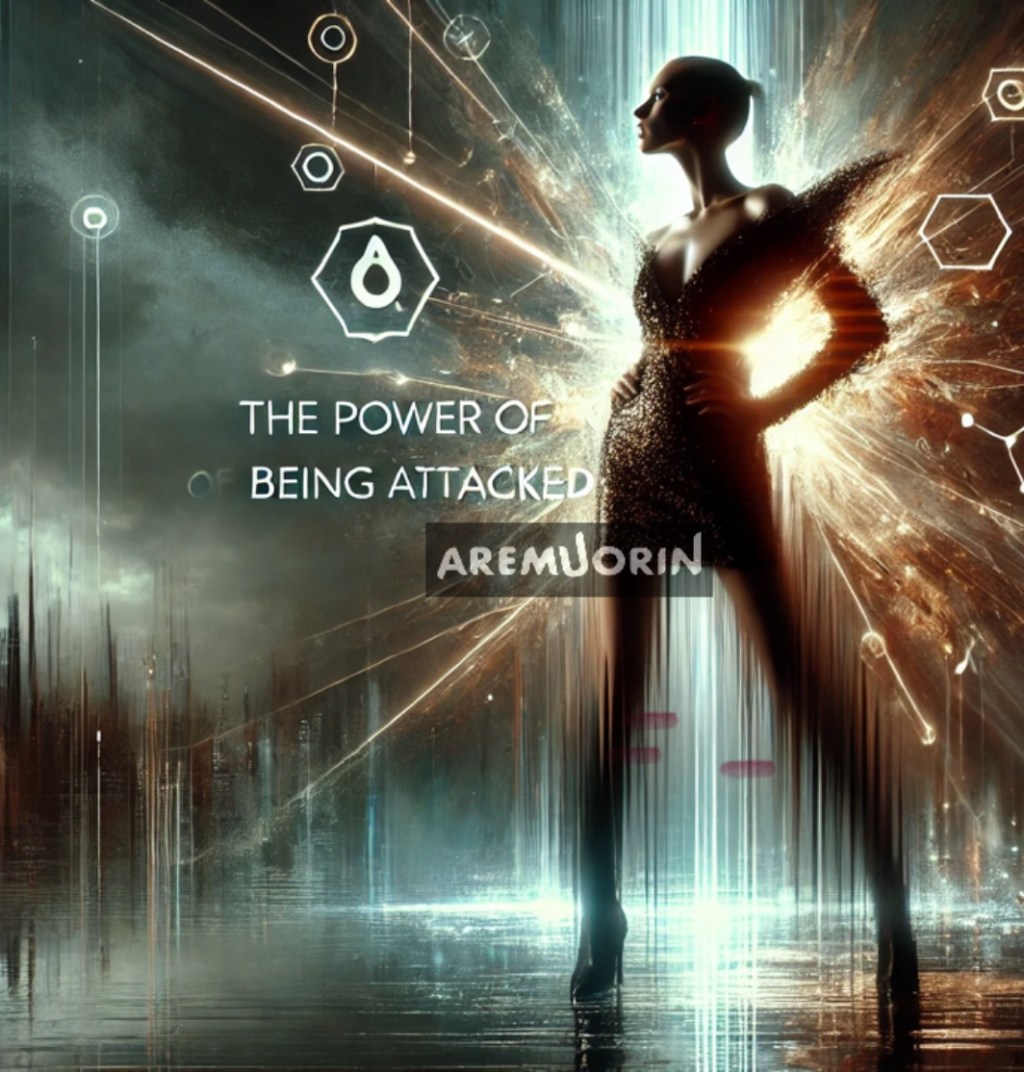
“If they are attacking you, it means you’re noteworthy, powerful, and a threat to their status quo.”
— Aremuorin
Introduction: The Paradox of Attacks
In life, when you’re attacked, it is often a sign that you’re doing something right. Whether it’s a smear campaign, criticism, or even malicious gossip, the very fact that someone or something is targeting you is a strong indicator of your influence. You are noteworthy. You are powerful. You are a threat to the status quo. This phenomenon, rooted in psychology and sociology, is not just a mere coincidence but a universal truth that transcends culture, class, and geography.
The Science Behind Attacks: Why You’re a Threat
From a psychological standpoint, attacks often arise out of insecurity, fear, or envy. When individuals or systems feel threatened by your success, ideas, or existence, they respond with aggression. This behavior can be linked to the concept of cognitive dissonance, where an individual or group experiences mental discomfort due to conflicting beliefs, values, or behaviors. For instance, when someone challenges the status quo or exposes uncomfortable truths, the brain’s defense mechanisms kick in, and the result is an attack or attempt to undermine.
“The stronger you affirm your boundaries against toxic narcissists, the harder they’ll try to malign your name with baseless degradations. Stay focused and unwavering.” – Aremuorin
Sociologically, attacks on influential figures can be seen as a reflection of social hierarchies. Those at the top of the pyramid—whether politically, economically, or socially—often feel the need to preserve their position. Any shift in the balance, particularly when someone challenges long-held norms, is met with resistance. In this context, you become a threat to the status quo simply by existing in opposition to established powers, beliefs, or practices.
The Transformational Power of Being a Target
Being attacked does not necessarily mean you are vulnerable. In fact, it can be a powerful indication that you’re on the right path toward transformation. Historically, some of the greatest revolutionaries and change-makers have been the subjects of relentless criticism and attack. From Martin Luther King Jr. to Mahatma Gandhi, every transformative figure faced monumental opposition. However, this opposition often fueled their resolve and magnified their impact.
The difference between surviving an attack and succumbing to it lies in perspective. Attacks are not just disruptions—they are opportunities for growth, self-discovery, and purpose. When you are attacked, you are called to redefine your strength, sharpen your convictions, and elevate your voice to levels that demand global attention.
Social Impact: When You Challenge the System
When you challenge the system, you begin a process of social change that affects everyone around you. You challenge norms, ideologies, and power structures that have been in place for centuries. The most influential movements in history have always been fueled by individuals who were willing to stand against the tide, knowing that their opposition would spark something larger. For example, the civil rights movement wasn’t just about ending racial segregation—it was about dismantling an entire system of privilege, power, and discrimination. Similarly, the fight for gender equality is more than just women demanding rights; it’s about exposing the deep societal roots of patriarchy and sexism.
Every attack you face is a microcosm of the broader battle for equality, justice, and truth. Your ability to stand firm in the face of adversity not only solidifies your personal resilience but ignites the potential for widespread change. #Aremuorin isn’t just a brand; it’s a movement for social change that leverages personal strength to challenge societal norms and elevate marginalized voices.
The Educational Aspect: What Can We Learn from Attacks?
Every attack is a lesson. If we choose to view them from a lens of growth, we can extract valuable insights into human behavior, societal pressures, and the ways we can effect change. From a sociological standpoint, attacks provide us with critical data on the prevailing power structures and the fault lines within society. They reveal who is truly invested in maintaining the status quo and who is pushing for innovation and change.
From a psychological perspective, attacks allow us to confront our inner strength and assess how well we cope with adversity. It forces us to build emotional resilience and mental fortitude. The key lies in how we respond—not in retreat, but in adaptation and evolution. Every attack is a chance to refine our strategies, reframe our goals, and rise stronger.
We must begin to recognize that being attacked is part of the natural progression of those who dare to lead. The very fact that the establishment feels threatened by you means that you are no longer a bystander in the world’s unfolding story; you are a key player in shaping its future.
Embrace your role as a disruptor, a change-maker, and a truth-teller. If they are attacking you, you’re already noteworthy. Now, let’s make that noise louder. Share your story, amplify your voice, and let the world see the strength that lies in opposition.
This statement reflects a psychological phenomenon rooted in the concept of “perceived threat” and “social status.” According to social psychology, when individuals or groups perceive a threat to their power, influence, or position within a social hierarchy, they often respond with defensive or aggressive behavior.
The psychologist Jean Piaget’s theory of cognitive development suggests that individuals’ perceptions of their environment are shaped by their understanding of power dynamics and their role within societal structures. When someone challenges the status quo, it disrupts the established norms, which can evoke feelings of insecurity or fear in those benefiting from the existing order.
Additionally, the concept of “social dominance orientation” (SDO), studied by psychologists like Jim Sidanius and Felicia Pratto, posits that people with high levels of SDO tend to support hierarchies and view any challenge to those hierarchies as a threat. Thus, when someone begins to challenge the status quo—whether through innovation, social activism, or personal power—they may provoke hostility from those who fear the erosion of their position in society.
In this context, the phrase highlights the idea that external attacks are often a reflection of an individual’s perceived power and influence, reinforcing the notion that those who are truly impactful can expect resistance from the entrenched powers that feel threatened by their existence or progress.
A widely known example of this psychological phenomenon is the life of Dr. Martin Luther King Jr. During the Civil Rights Movement in the United States, King faced vehement opposition, including violent attacks, imprisonment, and public vilification, from those invested in maintaining the racial segregation and inequality of the time.
His efforts to challenge the status quo of systemic racism and social injustice made him a target of individuals and institutions holding power within the existing social hierarchy. His message of peace, equality, and nonviolent resistance was perceived as a threat to the entrenched power structures of racism and segregation.
The hostility he faced, including being labeled as a “troublemaker” and a “threat to national security,” is a clear example of how those who challenge societal norms—particularly those benefiting from the status quo—are often met with fierce resistance. Despite the opposition, Dr. King’s influence grew stronger, affirming the idea that the intensity of the attacks on him was directly tied to his power to disrupt the established social order and create lasting change.
Conclusion: Attacks as a Badge of Honor
To be attacked is to be positioned as a powerful threat to those who wish to maintain the status quo. It is a sign that you are standing in the right place, asking the right questions, and pushing for the right changes. The attacks will come, but it is your response that will define the legacy you leave. Rise to the challenge, and let your impact be transformative.
The Call to Action: Embrace Your Influence:
Remember thieves don’t break into empty houses.
It’s time to embrace the attacks, the challenges, and the obstacles that come your way. They are not signs of weakness—they are proof that you are powerful enough to elicit a response. Your ideas, your voice, and your purpose are making waves, and that wave will continue to grow as long as you stand strong.
Transformation isn’t just a buzzword — it’s a cry for awakening. Through art, music, and truth, we expose the shadows: human experiments, hybrid horrors, fetal transplants, and the misuse of science cloaked in progress. We must rise — as voices, as vessels, as visionaries — to advocate for divine justice and ethical change. Silence is complicity. We are not lab rats. We are not disposable. We are sacred.
Have you heard this yet? “Aremuorin – Greater Ministry – (Gospel)”
Hashtags:
#Aremuorin #AremuorinSpeaks #Transformation #Leadership #ChangeMakers #SocialChange #PowerOfOpposition #GlobalImpact #Influence #DisruptTheSystem #Resilience #ChallengeTheStatusQuo #RiseAbove

Aremuorin is a multi-award-winning artist, writer, and humanitarian, known for his unique fusion of music, writing, and advocacy. With a focus on empowerment and social justice, his work aims to inspire, educate, and uplift communities worldwide. Aremuorin has been honored with numerous accolades, including awards in the UK, USA, and Africa, and holds two honorary doctorate degrees for his contributions to both the arts and humanitarian work. His artistry goes beyond entertainment, as he uses his platform to bring attention to issues of mental health, social change, and cultural pride.
(C) 2025 Aremuorin – All Rights Reserved

 Aremuorin™
Leave a reply to Breaking the Chains: Empowering Black Boys to Live Authentically Without Fear or Labels – Aremuorin Cancel reply