
Written by Aremuorin / Contact / Mailing List / Linktree / Latest Post / WhatsApp – Let’s keep the conversation going !!!
Introduction
If you sample a song to create a new genre, you’re expected to pay royalties and credit the original creator—yet when it comes to Western instruments shaped by African art and musical innovation, that same respect and acknowledgment is rarely given. Why?
Music is universal—it transcends borders, languages, and cultures, connecting us in ways words cannot. But as we enjoy the symphonies of Beethoven, the rhythms of jazz, and the melodies of pop, we often overlook the origins of the instruments that make these sounds possible. The truth is, the roots of many Western instruments and musical traditions can be traced directly back to Africa. Yet, these contributions have often been erased, appropriated, and redefined in ways that obscure Africa’s foundational role in shaping the music we know today. This article explores how African ingenuity and cultural contributions laid the groundwork for the violin, cello, piano, drums, and many other instruments, and calls for the acknowledgment and reclamation of African music’s rightful place in history.
African Music Banned:
• In the colonial era, African music was banned or viewed as “primitive.” Yet these very same forms formed the foundation of modern Western music.
• Case Study: In the United States, slaves brought African rhythms that eventually influenced American classical composers like George Gershwin and Leonard Bernstein.
Akin Euba, a renowned Nigerian musicologist, stated: “African traditional music represents a fine balance between unity and diversity, and there are enough unifying principles to enable us to speak of an African music in the same way in which we identify a European or Chinese music.”
The Violin & Cello: Strings of Africa
When you think of the violin or cello, images of European orchestras and Italian craftsmanship may come to mind. But the true genesis of these string instruments is deeply rooted in Africa. The rebab, an ancient African stringed instrument, shares striking similarities with the violin. Played with a bow, this instrument dates back to at least the 9th century and was a staple in African musical traditions. The kora and ngoni, stringed instruments from West Africa, are also considered early precursors to the violin, with their delicate, melodic strings creating sounds that were eventually adapted by European makers.
Over centuries, as Arab traders and African musicians traversed trade routes between Africa and Europe, these instruments—along with African music traditions—began to influence the European Renaissance. Italians, particularly, began to experiment with string instruments, eventually creating the violin and cello in their modern form. But the inspiration—the blueprint—for these instruments was African. In fact, it could be argued that without Africa’s contribution, there would be no violin or cello.
Historical accounts and archaeological findings show that the African rebab—which was brought to Europe by the Moors during the Middle Ages—served as the foundation upon which Western stringed instruments were built. Yet, these instruments were often renamed and rebranded as “European creations,” with little to no credit given to their African predecessors.
The Piano: A Legacy from Africa
The piano, often thought of as a staple of European classical music, also owes much of its existence to African instruments. The thumb piano (or kalimba) and the balafon, two traditional African percussion instruments, both played pivotal roles in the development of the piano.
The thumb piano, made from a wooden board with metal tines, is a melodic percussion instrument originating in Africa that influenced the early keyboard instruments developed in Europe. In fact, African rhythms—particularly polyrhythms—served as a major influence on the development of European classical music. The shape and structure of the piano owe much to the design and the musical styles of these African instruments.
Moreover, the keyboard layout of the modern piano can be traced back to the balafon, an ancient African xylophone-like instrument. The way that the keys are arranged, creating harmonies and melodies, was inspired by the African approach to musical scales and rhythm.
While the piano became a fixture in Western classical music, its roots are deeply African. Today, we can hear African rhythms in jazz and blues, genres that owe their existence to African music and its fusion with European forms. In essence, the piano is not just a Western invention, but an African legacy.
Brian Eno, a prominent figure in the digital age of art and music, remarked: “So much that I love about music comes from that collision [of vernacular Western music with African music]. African music underlies practically everything I do.”
The Djembe and Drums: The Heartbeat of African Music
The djembe, a traditional African drum, has become one of the most iconic percussion instruments worldwide. However, the African influence extends far beyond the djembe to the very core of Western percussion. African drumming techniques, with their emphasis on polyrhythm and syncopation, became the foundation of modern drum kits and percussion instruments in both Western and global music.
The talking drum, djembe, and dundun—all indigenous to West Africa—have inspired Western musical forms like jazz, funk, and rock. African polyrhythms and the concept of using rhythm to convey emotions and messages shaped the way drums are played in Western music today.
In particular, the African influence on jazz drumming is undeniable. Louis Armstrong, Max Roach, and Art Blakey all drew heavily from African rhythms, fusing them with European instruments to create what we now know as jazz. Furthermore, drum circles and the use of drums for communication, spiritual practice, and storytelling in Africa has transcended into global music, from modern pop to rock and roll.
Wind Instruments: The African Roots of Brass and Woodwinds
While much of the Western world associates instruments like the saxophone, clarinet, and trumpet with European classical music, these too have African roots. African wind instruments, such as the flute and shakuhachi, provided the initial inspiration for Western woodwind instruments. The sound and technique of these African instruments eventually found their way into European culture, adapting and evolving into what we now recognize as brass and woodwind instruments.
In the case of the saxophone, Adolphe Sax was inspired by African wind instruments and sought to create an instrument that could produce the melodic range of string instruments, but with the power of brass. His instrument has since become synonymous with jazz, a genre deeply rooted in African traditions.
The Legacy of African Music in Western Genres
Genres like blues, jazz, rock, and pop are all heavily influenced by African musical traditions. Blues, for example, was born from the African-American experience and embodies the same call-and-response patterns and pentatonic scales found in traditional African music. It is no coincidence that the blues scale is fundamentally similar to African melodic structures.
Moreover, the evolution of jazz—often referred to as the “African-American classical music”—is a direct result of the blending of African rhythmic patterns and European instruments. Artists like Miles Davis, John Coltrane, and Duke Ellington all fused African rhythms with European orchestration, giving birth to an entirely new genre that would influence global music forever.
Cultural Appropriation and the Erasure of African Contributions
Despite the undeniable African roots of these instruments and genres, colonial narratives have long erased or ignored Africa’s role in the creation of Western music. African musicians, whose innovations shaped European music, were systematically marginalized, and their contributions overlooked or appropriated without credit.
For centuries, African music was viewed as “primitive” by colonizers, even though these same forms became the foundation of the music they exported to the world. The narrative of the European invention of instruments like the violin, piano, and drums has often failed to acknowledge their African origins.
Conclusion: Reclaiming Africa’s Legacy in Music
It’s time to reclaim the narrative and acknowledge Africa’s contributions to global music. The instruments we play today—the violin, piano, djembe, and countless others—are not solely European inventions, but rather African legacies. Africa’s influence is embedded in every note played, every rhythm danced, and every melody sung across the world.
As we continue to celebrate global music, let’s make sure we honor its true roots and give credit where it’s due. Africa’s musical genius has shaped the soundscape of the world—whether we recognize it or not.
Call to Action:
Let’s change the narrative. Let’s spread the word. It’s time we stopped calling African contributions “exotic” and started calling them “foundational”. Share this article, engage in conversation, and educate the next generation of musicians, scholars, and artists. Africa’s music history is the key to understanding modern genres, and it’s time we start acknowledging that. Not just culturally but economically for legacy, impact and regeneration.

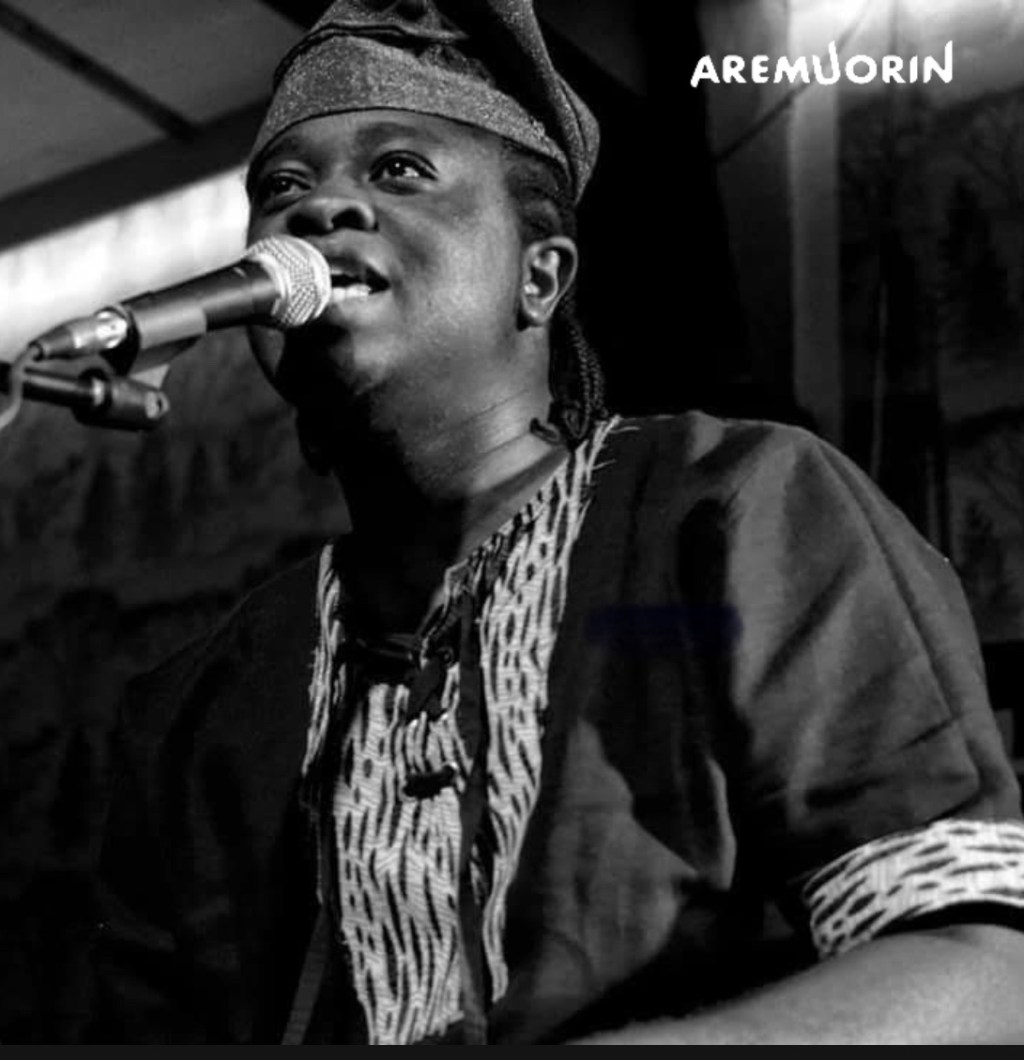
Aremuorin is a multi-award-winning artist, writer, and humanitarian, known for his unique fusion of music, writing, and advocacy. With a focus on empowerment and social justice, his work aims to inspire, educate, and uplift communities worldwide. Aremuorin has been honored with numerous accolades, including awards in the UK, USA, and Africa, and holds two honorary doctorate degrees for his contributions to both the arts and humanitarian work. His artistry goes beyond entertainment, as he uses his platform to bring attention to issues of mental health, social change, and cultural pride.
Written by Aremuorin / Contact / Mailing List / Linktree / Latest Post / WhatsApp – Let’s keep the conversation going !!!
Written by Aremuorin
© 2025 Aremuorin. All Rights Reserved.
Aremuorin@Aremuorin.me


Leave a Reply